Principal Reference Work
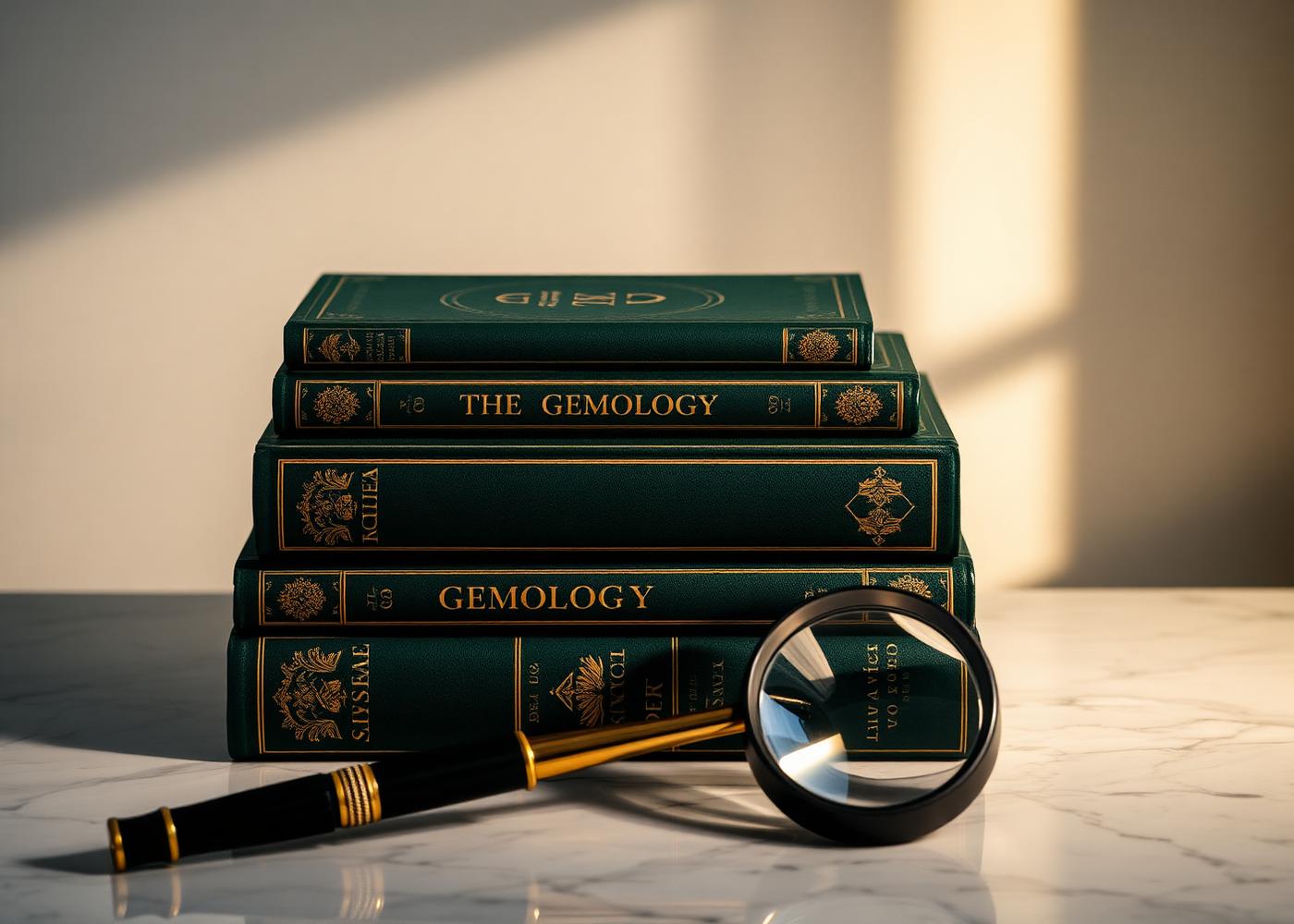
The Gem Compendium.
The central scientific reference of EGP — a systematic, evidence-led treatment of gem species, internal features, treatments, and identification protocols, authored by Eman Galeb Hamza.
Purpose
A reference written to be cited, corrected, and relied upon.
The Gem Compendium is not a catalogue of beautiful stones. It is a working instrument: every entry is organised around what can be observed, measured, and defended. Diagnostic keys are stated plainly, limits of certainty are declared, and every claim is traceable to laboratory evidence or published literature.
It is written for the bench — for the student learning to read an inclusion scene, for the laboratory confirming a treatment, and for the appraiser who must justify a conclusion in writing.
Structure
Four volumes, one continuous scientific argument.
Volume I
Principles & Instrumentation
Crystal systems, optical behaviour, refractometry, specific gravity, spectroscopy, and the disciplined use of the gemological microscope.
Volume II
The Species Atlas
Systematic entries for beryl, corundum, spinel, garnet, tourmaline, quartz, feldspar, and the rarer collector species — each with diagnostic keys.
Volume III
Inclusions & Internal Evidence
Photomicrographic documentation of three-phase, two-phase, solid, and growth-related inclusions, with notation standards for recording them.
Volume IV
Treatments, Synthetics & Disclosure
Heat, diffusion, clarity enhancement, and modern synthesis — detection thresholds, laboratory evidence, and the ethics of full disclosure.
Specification
Publication details.
- Author
- Eman Galeb Hamza
- Imprint
- EGP Publications
- Structure
- Four volumes, continuously revised
- Languages
- English · Arabic
- Status
- In preparation — 2026
- Audience
- Students, laboratories, appraisers, institutions
Institutional and academic enquiries
Libraries, laboratories, and teaching institutions may register interest in the reference edition and review copies.